Thanusan Ranjan | Geomechanics & Environmental Geotechnics PhD Candidate Monash University Malaysia
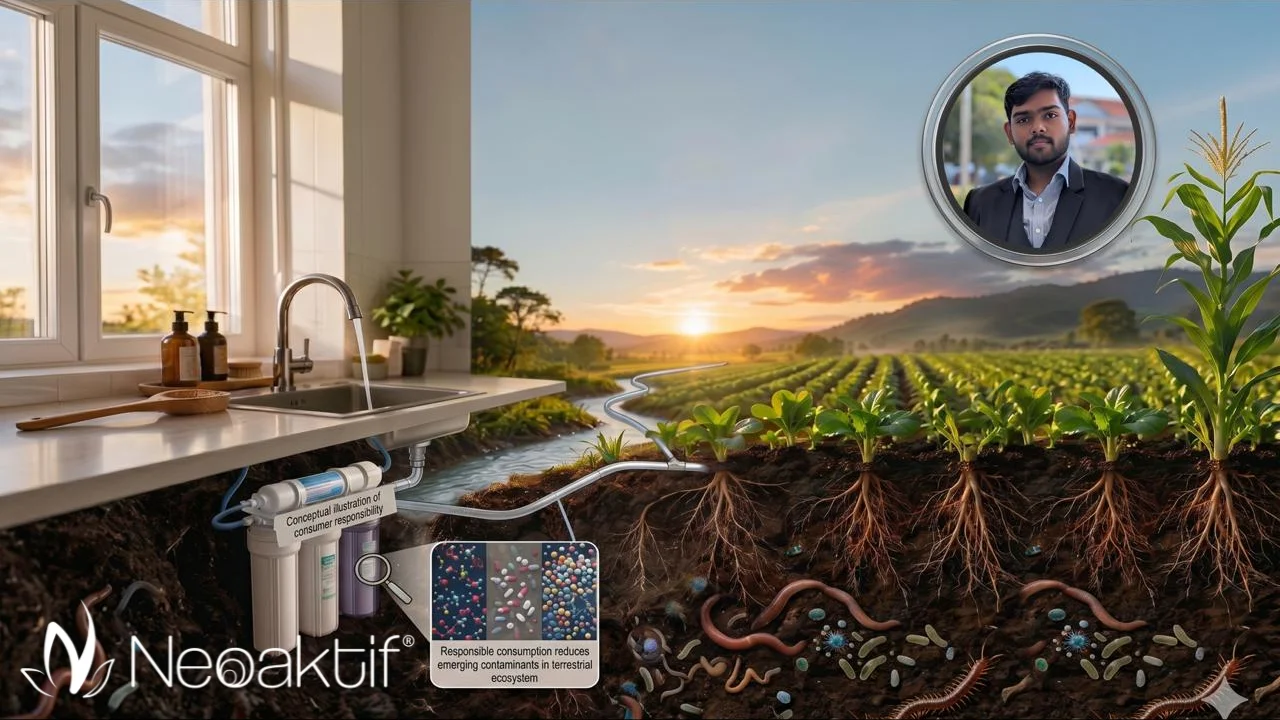
Every day, we use detergents, cleaning products, personal care items, and medicines without giving them much thought. Once they disappear down the drain, we often assume the story ends there.
But does it?
Many chemical residues and microplastics can eventually find their way into our water systems and soils. Over time, these invisible contaminants may affect the microorganisms that help maintain soil health, support crop growth, and naturally store carbon.
When soil health declines, the consequences can extend far beyond the farm. Reduced crop productivity may increase food production costs, while lower carbon storage capacity can weaken one of nature’s most effective tools for addressing climate change.
The solution is not about avoiding modern conveniences. Rather, it is about understanding the long-term impact of our daily choices and supporting safer, more environmentally responsible alternatives wherever possible.
The products we use today may seem harmless once they leave our homes, but their journey does not end there.
What goes down the drain does not simply disappear. It becomes part of our shared future.
Research and awareness initiatives led by @Monash University Malaysia, supported by industry collaborators including @Neoaktif, continue to help bridge scientific understanding with practical sustainability solutions.